
Technology from tomorrow

Outstanding Blog BlogBlog

Best Local Air Conditioning Company.

High Pressure Switch: Reset, Causes & Safety

What a High Pressure Switch Does and Where It Sits

Your air conditioner moves heat by circulating refrigerant, and that refrigerant gets squeezed hard on its way out of the compressor. The high pressure switch is the small safety device that keeps the squeeze from going too far. It’s a normally closed switch: power flows to the compressor under ordinary conditions, and the circuit opens the moment discharge pressure climbs past a set trip point.

You’ll find it on the discharge side of the system, between the compressor and the condenser, according to this AC high pressure switch guide. That spot makes sense. It’s where pressure runs highest, so it’s where trouble shows up first. When the switch opens, the compressor shuts off and your outdoor unit goes quiet. That’s the switch protecting the most expensive part of your system from damage.

Trip points vary by equipment. Many residential R-410A switches open somewhere between 590 and 650 psig and close again around 420 to 450 psig, based on third-party technical references. Treat those as general ranges and check your manufacturer’s literature for your exact unit. A healthy system on a 90°F day sits well below the trip point and never comes close to it.

Some switches reset on their own once pressure falls. Others are manual reset and stay open until someone presses a button. So if your AC stops cooling and the outdoor unit won’t start, the switch may be doing exactly the job it was built for.

Why It Trips and What Causes Repeat Trips

A high pressure switch never trips for no reason. Something is making the system run hotter and harder than it should. The usual suspects behind a repeat trip:

  • A dirty condenser coil. When the outdoor coil is caked with dirt, cottonwood fluff or grass clippings, heat can’t escape and pressure climbs.
  • A failed or weak condenser fan motor. If the fan isn’t pulling air across the coil, the refrigerant can’t shed its heat.
  • An overcharge of refrigerant. Too much refrigerant raises pressure all by itself.
  • A restriction in the liquid line. A blockage keeps refrigerant from flowing freely and drives pressure up behind it.

A clogged air filter or blocked airflow can pile on, since poor airflow makes the whole system work harder. And on a brutal Houston afternoon, high outdoor temperatures can push a marginal system over the edge. A unit that’s fine in April can start tripping in August simply because it has less room to spare.

Here’s the key point: resetting the switch without fixing the cause will most likely trip it again. One trip during extreme heat might be a fluke. A switch that trips again and again is telling you something is wrong. Some heat-pump control boards even lock out after three consecutive high pressure trips in one cycle and demand a manual reset. Take that lockout as a warning, not an inconvenience to work around.

How to Reset It Safely and When to Stop

If you want to try a reset, do it carefully and only once. Here’s the safe sequence:

  1. Turn the thermostat to off.
  2. Shut off power to the system at the circuit breaker before touching anything, as this reset guide stresses to avoid electrical hazards.
  3. Wait a while so the system and its pressure can settle.
  4. Check the easy stuff. Look at your air filter and make sure debris or overgrown plants aren’t crowding the outdoor unit.
  5. Restore power and, if you have a manual-reset switch, press the reset button once. Not every system has one, and many switches reset automatically.
  6. Turn the thermostat back on and watch whether the system runs normally.

If it runs and cools, great. Keep an eye on it for the rest of the day. For a general walkthrough, this reset guide covers the basics.

Now the part that matters most: knowing when to stop. If the system trips again after a reset, don’t keep trying. Repeated resets force the compressor to run under the very conditions the switch exists to protect it from. Stop, too, if you hear unusual noises, smell something burning, or spot ice or oily residue near the unit. Testing the switch with a meter, replacing it, or checking the refrigerant charge is technician territory. Those jobs take the right tools and training.

Heat-Wave Safety for Houston Homeowners

Houston summers are exactly when a high pressure switch earns its keep, and exactly when homeowners are tempted to cut corners. It’s 100 degrees outside, the house is warming up, and flipping the breaker off and on until the AC kicks back in feels like a reasonable move.

It isn’t. If the high pressure switch caused the lockout, cycling the breaker without finding the underlying airflow or pressure problem forces the system to run under dangerous conditions, a risk this tripped switch diagnostic article points out directly. You could turn a repairable issue into a failed compressor, and that’s a much bigger headache to sort out in the middle of summer.

So what do you do while you wait for help? Keep your family comfortable and safe first:

  • Close blinds and curtains on sun-facing windows to slow heat buildup.
  • Run ceiling fans and portable fans to keep air moving.
  • Drink plenty of water and skip strenuous activity during the hottest part of the day.
  • Check on children, older relatives, and pets, who feel the heat fastest.
  • Move to the coolest room in the house, usually a lower floor or an interior room.

If anyone shows signs of heat illness, such as dizziness, confusion, or heavy sweating followed by a lack of it, treat it as a real emergency: get them cooled down and seek medical help. Comfort matters, but safety comes first. Once everyone is settled, call a professional rather than wrestling with the system yourself.

Prevention Tips and When to Call Uptown 24/7, Including Spanish-Language Help

The best way to deal with a tripped switch is to keep it from tripping at all. Most prevention comes down to simple habits:

  • Change your air filter regularly. A clean filter keeps airflow strong and eases the strain on the whole system.
  • Keep the outdoor unit clear. Trim plants back and sweep away leaves, grass and debris so air can move freely around the condenser.
  • Rinse dirt off the outdoor coil gently, with the power off, whenever you notice buildup.
  • Schedule a tune-up before summer hits. A technician can clean the coil, test the fan motor, and catch small problems before they become lockouts.

Regular filter changes and coil cleaning are the simplest ways to head off future trips, a point echoed in this expert Q&A on resetting the switch. If you’d rather have a pro handle it, our air conditioner repair service covers diagnosis and fixes, and the guide on AC unit repair in Houston walks through what to expect. You can also read more about how a high pressure switch protects your AC system.

When your high pressure switch trips a second time, or you simply don’t feel comfortable poking around, that’s the moment to call. Uptown Heating & Air Conditioning is a family-owned company serving Houston, Katy, Cypress, Richmond and Sugar Land, with 24/7 emergency service, online booking and financing options if repair turns into replacement. A technician will find out why the switch is tripping before recommending a fix, so you understand the problem before you decide anything.

¿Prefiere hablar en español? Nuestro equipo atiende también a clientes de habla hispana, así que no dude en pedir ayuda en su idioma. Cuando el aire acondicionado se apaga y el interruptor de alta presión vuelve a dispararse, llámenos: lo revisamos con calma y le explicamos todo con claridad.

Stay cool, Houston. 🌬️ If your high pressure switch keeps tripping, we’re here around the clock.
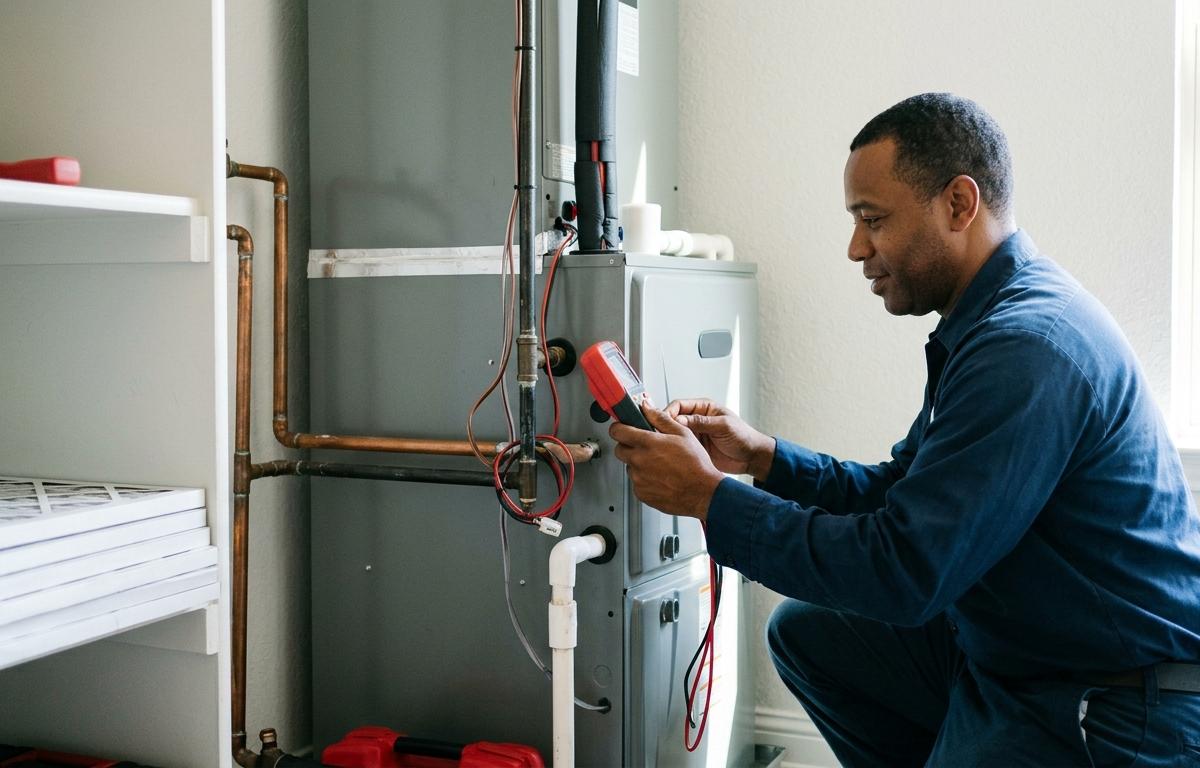
🔥 Furnace Works Some Days, but Not Others? 🏠

🔥 Furnace Works Some Days, but Not Others? 🏠

Unreliable heat can make it hard to stay comfortable. Even if your furnace starts working again, a recurring problem deserves a closer look.

Help your technician understand what happens by noting:

🌡️ The thermostat setting when heating stops
⏰ When the problem occurs and how long it lasts
💨 Whether air still comes from the vents
⚠️ Any error code visible on the display

These details can help with diagnosis, especially when the problem isn’t happening during the service visit.

At Uptown Heating & Air Conditioning, we investigate intermittent heating problems and explain your repair options.

📲 Contact us today to schedule your furnace diagnostic!

#UptownHeatingAndAirConditioning #FurnaceRepair #FurnaceDiagnostics #HeatingRepair #HomeComfort #HoustonTX #KatyTX #CypressTX #RichmondTX #SugarLandTX

🔥 Furnace Problems? A Clear Diagnosis Comes First. 🏠

🔥 Furnace Problems? A Clear Diagnosis Comes First. 🏠

No heat doesn’t always mean you need a new furnace. Different problems can cause similar symptoms, so finding the cause is the first step toward the right repair.

At Uptown Heating & Air Conditioning, our diagnostic process focuses on:

🔧 Checking the components related to your concern
🌡️ Evaluating how your system operates
📋 Explaining what we find in plain language
🏠 Helping you understand your repair options

Whether your furnace won’t start, stops unexpectedly, or struggles to warm your home, our team is ready to help you get answers.

📲 Contact us today to schedule your furnace diagnostic!

#UptownHeatingAndAirConditioning #FurnaceDiagnostics #FurnaceRepair #HeatingRepair #HomeComfort #HoustonTX #KatyTX #CypressTX #RichmondTX #SugarLandTX

HVAC System and Installation Guide for Houston

What a Professional HVAC System Installation Involves

A good hvac system and installation project starts well before anyone carries a condenser into your yard. Here at Uptown Heating & Air Conditioning, the first visit is the one we care about most. A system that’s wrong on paper will be wrong on the roof, in the attic and on your electric bill. 😊

The process usually runs in this order:

  1. Site assessment. A technician checks your home’s layout, insulation, windows, sun exposure and the equipment you already have. Houston homes vary a lot, from older bungalows to newer builds in Katy, Cypress and Sugar Land, and what suits one rarely fits another exactly.
  2. Load calculation and sizing. The right capacity depends on the home itself, not just its square footage. An oversized unit cools fast, shuts off early and leaves the humidity behind, which is the last thing you want on the Gulf Coast. An undersized unit never stops running. Sizing is where a careful contractor earns the price.
  3. Equipment selection. We walk you through options that match your home, your budget and your comfort goals, including whether you need a full system or only part of one.
  4. Removal of the old system. We disconnect the existing equipment, handle the refrigerant properly and haul the old unit away.
  5. Install day. The new indoor and outdoor components get set, connected and sealed, and the electrical, drainage and thermostat connections are finished.
  6. Startup testing. We don’t call a job done until the system has been started and checked for airflow, refrigerant charge, temperature performance and safe operation.
  7. Walkthrough and paperwork. You see how the thermostat works and which maintenance matters, and we register the warranty so your coverage actually applies.

Want a closer look at what you gain once it’s all running? Our piece on breathing easy with a new HVAC system installation covers the comfort and air quality side. You can also browse our installation services page to see the types of work we handle.

Climate matters here too. Gulf Coast humidity makes AC systems work harder and wear out faster than almost anywhere else in the country, according to Angi’s Houston data. That’s a good reason to size carefully and keep up with maintenance after the install.

Permits and Efficiency Standards for Houston Installs

Two rules shape every hvac system and installation project in our area: the permit and the efficiency minimum. Neither is a hurdle once you know it’s there, but both need to be handled correctly.

Permits. The City of Houston requires a mechanical permit for any HVAC system replacement. One vendor page puts the permit fee at roughly $100 to $400, but that figure comes from a third-party source, so confirm the current fee with the City before you budget around it. The permit makes sure the work is inspected and meets code, which protects you when you sell the house or file a warranty or insurance claim. A permit line on your quote is normal, and it’s a good sign. If a quote skips it, ask why.

Efficiency standards. Texas falls in the South region under the federal efficiency rules. The regional minimum for air conditioners and heat pumps is 14.3 SEER2, compared with 13.4 SEER2 in the North, as laid out in this SEER2 rating guide. The SEER2 label has appeared on all air conditioners and heat pumps sold and installed in the US since January 1, 2023, per the DOE regional minimums.

In practice, these standards apply by installation date, and an outdoor unit rated below the regional standard can’t be installed in the region. You can read more about how the rules work in this overview of federal HVAC regulations. So when a quote lists a rating, check it against the South-region minimum. A reputable installer will already have done that for you.

One more note: efficiency tax credits and rebates have shifted over the past couple of years. Before you count on any savings, verify the current IRS and ENERGY STAR credit status instead of trusting a number someone quoted last season.

What Drives HVAC Installation Pricing in Houston

Publishers disagree about what an hvac system and installation costs, and the gaps are real. They mostly come down to scope: air conditioner only versus a full furnace-and-AC package, how much of the work is new, and which efficiency tier you pick.

Here are the Houston reference points we can point to. Angi’s Houston data puts an AC replacement at about $6,375 on average and a furnace and AC replacement at about $7,395, with most Houston residents paying between $4,930 and $12,325. A complete system replacement that includes new air channels runs higher, from $10,000 to $22,000 according to the same Angi Houston breakdown. Use these as ranges to get your bearings, not as a promise about your own home.

The main price drivers are:

  • Equipment. Capacity and efficiency level matter most. A higher-efficiency unit costs more up front and can trim running costs over time.
  • Labor. Residential installation labor runs about $75 to $200 per hour, and emergency or after-hours work runs $150 to $290 per hour, per Angi Houston.
  • Scope. Reusing existing connections costs less than rebuilding them.
  • Permits, delivery and disposal. These are smaller line items, but they add up.
  • Timing. Prices can swing significantly in summer, when demand for contractors peaks, as noted by Modernize. If your system is limping along in April, replacing it before the heat arrives can be easier on both your schedule and your wallet.

A typical installed quote breaks down roughly like this: materials $1,500 to $7,000, labor $1,200 to $4,500, equipment $2,000 to $8,000, permits $50 to $400, and delivery and disposal $100 to $600, according to Quality Home Air Care. Those bands overlap and won’t sum neatly to your total, but they show where the money goes.

Reading an Itemized Quote and Choosing the Right Option

A quote for hvac system and installation work should be a document you can actually read, not a single number scribbled on a business card. Whoever you hire, ask for it in writing and look for these things:

  • Equipment named specifically, with its capacity and efficiency rating, so you can confirm it meets the 14.3 South-region minimum.
  • A sizing basis. The quote should reflect a real assessment of your home, not a guess from square footage alone.
  • Labor, permit and disposal lines shown separately, so you can see what’s included.
  • Warranty terms for both parts and labor, and who registers the equipment.
  • Scope clarity. It should say what’s being replaced and what’s being reused.

Red flags are easy to spot once you know them. Be cautious of a quote with no permit line, a price offered over the phone without anyone seeing your home, pressure to sign the same day, or a lump sum with no breakdown. A bargain that skips sizing or permitting tends to cost more later.

When you compare options, line the quotes up on the same terms: same capacity, same efficiency tier, same scope. A lower number often means something is missing, not that the contractor is cheaper. And if you’re weighing a repair against a replacement, a rough rule of thumb is to multiply the repair cost by the system’s age in years. A $200 repair on a 12-year-old system works out to $2,400, which tilts toward fixing it. That’s only a heuristic, but it helps frame the decision. Our guide to AC unit repair in Houston covers the repair side in more detail, and our furnace repair winter guide does the same for heating.

Here’s how to choose. Pick the option that’s correctly sized, meets the efficiency minimum, is permitted, comes with clear warranty terms, and is explained in language you understand. We’re glad to explain any of it in English or Spanish, so nobody has to sign something they don’t fully follow.

Why Houston Homeowners Choose Uptown Heating & Air Conditioning

We’re a family-owned and operated HVAC company serving Houston, Katy, Cypress, Richmond and Sugar Land. Our work covers air conditioning and furnace repair, replacement, new installations, tune-ups and preventative maintenance, so the same team that installs your system can look after it for years. You can learn more about us and how we run things.

What our customers tell us they value is simple: honest explanations, a quick response and no surprises. We offer 24/7 emergency service, online booking and financing options, which makes it easier to act when a system fails in the middle of a Houston summer instead of waiting and hoping. If you’d rather start with a conversation, we’re happy to talk through your options, show you what a fair itemized quote looks like and answer questions in English or Spanish. 👍

If your current system is aging, noisy or running up your bills, an assessment is a low-pressure first step. Reach out, book online, and let us size the right solution for your home.

🔥 Furnace Keeps Heating Past Your Thermostat Setting? 🏠

🔥 Furnace Keeps Heating Past Your Thermostat Setting? 🏠

If your home gets warmer than the temperature you selected, your heating system may need attention. Thermostat, wiring, or control issues could be involved.

Watch for these signs:

🌡️ Room temperature rises above your setting
🔥 Warm air continues after the target temperature is reached
🔧 Furnace doesn’t respond to thermostat changes
🏠 Your home feels uncomfortably warm

A blower running briefly after heating stops can be normal. Continued heating beyond the set temperature deserves a professional diagnostic.

At Uptown Heating & Air Conditioning, we identify the cause and explain your repair options to help restore reliable temperature control.

📲 Contact us today to schedule your furnace diagnostic!

#UptownHeatingAndAirConditioning #FurnaceRepair #ThermostatIssues #HeatingRepair #HomeComfort #HoustonTX #KatyTX #CypressTX #RichmondTX #SugarLandTX

🔥 Furnace Humming but Not Heating? 🏠

🔥 Furnace Humming but Not Heating? 🏠

A quiet hum can be part of normal operation. But a new or unusually loud hum—especially when your furnace won’t start or deliver heat—deserves a closer look.

Have you noticed?

🔊 Humming without normal startup
💨 Little or no airflow from the vents
🌡️ Your home staying below the set temperature
⚠️ Repeated attempts to begin heating

Motor, electrical, or other operating problems could be involved. The sound alone won’t tell you which component needs attention.

At Uptown Heating & Air Conditioning, we diagnose the cause and explain your repair options to help restore dependable comfort.

📲 Contact us today to schedule your furnace diagnostic!

#UptownHeatingAndAirConditioning #FurnaceRepair #HeatingRepair #FurnaceService #HomeComfort #HoustonTX #KatyTX #CypressTX #RichmondTX #SugarLandTX

Furnace Repair in Houston: Winter Guide

Warning Signs Your Furnace Needs Repair This Winter

Houston winters are short, but a cold front can roll in overnight and send temperatures tumbling. That’s exactly when a furnace that has sat idle since last February gets asked to pull its weight. January is when most people start searching for furnace repair, and the story is a familiar one: the system limped through the fall, then quit on the first truly cold morning. The good news? Most furnaces drop hints long before they fail completely.

Start with your ears. Banging, squealing, rattling or a loud scraping sound during startup or while the blower runs usually means a worn part, like a blower motor or a loose component. If the system clicks over and over but never produces heat, the ignitor or flame sensor is often the culprit. Hear it running but can’t feel any warmth? Worth a call.

Airflow and temperature tell the next part of the story. Weak airflow from the vents, rooms that never warm up, or lukewarm air where there should be hot air all suggest the system is struggling. So does a furnace that switches on and off in short bursts, known as short cycling. Energy bills creeping up while your habits haven’t changed are another quiet sign that the furnace is working harder than it should.

Smells matter too. A brief dusty smell the first time you fire up the heat each winter is normal, since dust has settled on the components. A lingering burning smell, or anything that smells like gas, is another matter. If you smell gas, get out of the house, don’t flip any electrical switches, and call your gas utility from outside. That is a true emergency, and so is losing heat during a hard freeze when children, older family members or anyone with a health condition is at home.

Not sure whether what you’re seeing is urgent? Treat a gas smell, a yellow or flickering burner flame, or a complete loss of heat in freezing weather as a same-day call.

Typical Furnace Repair Pricing in Texas

Nobody likes calling a technician without a rough idea of the bill, so here’s what the research shows. One thing up front: most of the published furnace figures come from statewide Texas or North Texas guides, not Houston specifically. Treat them as a realistic range, not a quote.

According to one Texas guide, most homeowners pay between $150 and $480 for standard furnace repairs. Minor part fixes run under $200, while major components can reach $1,000 or more. Another Texas guide, Texas Temp Masters, puts the overall range at $72 to $2,250, with an average of about $270 against a national average of $300. The two sources don’t match exactly, and that’s normal. Each draws on different jobs, different service areas and different definitions of a "standard repair."

At the part level, a North Texas technician lists an ignitor at roughly $150 to $300, a blower motor at $400 to $800, and a heat exchanger at $1,500 to $2,500. That spread is why a furnace bill can feel so unpredictable. A failed ignitor is a routine fix, while a cracked heat exchanger is a much bigger conversation and often tips the decision toward replacement. For reference, the same guide puts a new installed furnace at $3,500 to $6,500.

Diagnostic fees are worth understanding before anyone shows up. Several Texas contractors credit the diagnostic fee toward the repair if you go ahead with the work, so ask about it when you book. After-hours calls are a different story. One price aggregator, Fix Cost Guide, claims that emergency dispatch alone typically runs $250 to $600 before parts and labor. That’s one source’s claim, not an industry standard, so use it as a reason to ask any company about its after-hours fee before you agree to a visit.

Repair or Replace: The 50% Rule and System Age

When a furnace fails, the second question after "how much?" is usually "is it even worth fixing?" The most common rule of thumb, repeated by contractors across Texas, is the 50% rule: if the repair costs more than half the price of a new system, replace it. According to Triad Mechanical, repair generally makes sense when the furnace is under 10 years old and the fix costs less than 50% of replacement.

Age matters because every year of use brings you closer to the next breakdown. Replacement usually makes sense when the furnace is 10 to 15 years old or more, when it keeps breaking down, or after a major component failure. A $200 ignitor on a 7-year-old furnace is an easy yes. A $2,000 heat exchanger on a 14-year-old furnace is usually money better spent on a new unit, especially because a cracked heat exchanger is a safety concern, not just a comfort one.

Here’s one way to work it out with the figures above. If a new furnace runs $3,500 to $6,500 installed, half of that is roughly $1,750 to $3,250. A blower motor at $400 to $800 sits well under that line on a younger system. A heat exchanger at $1,500 to $2,500 lands right around it, which is why that repair deserves a hard second look at the furnace’s age and history.

Two practical tips help here. First, ask the technician for the repair price and the age of the unit in the same conversation, because the two numbers together tell you more than either one alone. Second, count repeat visits. If this is the second or third repair in a couple of winters, keeping the old furnace alive is already costing more than any single invoice suggests. A good technician will walk you through both options honestly and let you decide.

How to Choose a Licensed Houston Furnace Repair Company

Anyone can claim to be the best furnace repair company in Houston. What you can actually verify is licensing, and in Texas that check is simple.

The Texas Department of Licensing and Regulation, or TDLR, licenses Air Conditioning and Refrigeration contractors, and any company doing HVAC work for pay must hold an active TDLR license. You can read more about how that works in the Texas HVAC license guide from Aptora. Individual technicians register with TDLR and work under a licensed contractor, and they also need EPA 608 certification to handle refrigerants, as outlined in this Texas HVAC certification guide.

A quick step-by-step check:

  1. Ask the company for its TDLR license number. In Texas these often appear as "TACLA" followed by digits, and a legitimate company will hand it over without hesitation.
  2. Look the number up on the TDLR website to confirm the license is active.
  3. Ask whether the technician coming to your home is registered with TDLR and works under that license.
  4. Ask whether the diagnostic fee is credited toward the repair and whether there’s an after-hours surcharge.

One more detail: gas-line work leading to the furnace may require a licensed plumber in some jurisdictions, while the gas valve inside the furnace counts as HVAC work. A thorough company will tell you up front if a job crosses that line.

Beyond licensing, look for the things that matter on a cold night: clear pricing, real availability when you call, and technicians who explain the problem in plain language so you understand it, whether you’re reading this in English or Spanish. To see how we work, you can learn about Uptown’s family-owned team or browse our air conditioner repair and heating service pages.

Uptown’s 24/7 Winter Furnace Repair and Online Booking

Uptown Heating & Air Conditioning is a family-owned and operated HVAC company serving Houston, Katy, Cypress, Richmond and Sugar Land. We handle furnace and air conditioning repair, replacement, new installations, tune-ups and preventative maintenance. And we offer 24/7 emergency service for those nights when the temperature drops and the heat won’t come on.

When you need furnace repair, we want it to be as painless as possible. Book online instead of waiting on hold, and if things are urgent, our emergency line is open around the clock. Our approach is friendly and practical: we explain what’s wrong, lay out your options, and let you decide with real information instead of pressure. If the repair is small, we fix it. If replacement makes more sense given the furnace’s age and the repair cost, we’ll say so and walk you through financing options.

A few simple habits can also keep a small problem from becoming a big one this winter. Replace your air filter, keep vents and returns clear of furniture, and book a tune-up before the coldest weeks arrive. If you’d like to know what a visit involves, our guide on the benefits of professional repair services explains what a good service call looks like, and it’s worth a read before you call anyone. And if the blower motor is the issue, this note on not forgetting your blower motor shows why that component matters so much in cold weather.

Whether it’s a strange noise, weak airflow or no heat at all on a freezing morning, the best time to call is the moment something feels off. Reach out to Uptown, book online or call day or night, and we’ll get a licensed technician working on your furnace repair so your home is warm again.

🔥 Furnace Repair or Replacement? Know Your Options. 🏠

🔥 Furnace Repair or Replacement? Know Your Options. 🏠

When furnace problems keep returning, deciding what to do next can feel overwhelming. A clear diagnosis helps you understand whether another repair makes sense or replacement deserves consideration.

Here’s what matters:

🔧 How often your furnace needs repairs
📋 The condition of the system
💵 The cost and scope of the proposed repair
🌡️ How consistently it heats your home

An older furnace doesn’t automatically need replacement. The right choice depends on its condition, performance, and your budget.

At Uptown Heating & Air Conditioning, we explain our findings and your options so you can make an informed decision for your home.

📲 Contact us today to schedule your furnace evaluation!

#UptownHeatingAndAirConditioning #FurnaceRepair #FurnaceReplacement #HeatingService #HomeComfort #HoustonTX #KatyTX #CypressTX #RichmondTX #SugarLandTX

AC Unit Repair in Houston: Costs & Options

Typical AC Unit Repair Costs in Houston

When your AC unit quits during a Houston summer, the first question is always the same: how bad is this going to be? Honestly, it depends on what failed. Angi reports that Houston HVAC repair runs from $128 to $1,972, with an average of $345 and hourly rates between $75 and $150. Its table puts air conditioning repairs specifically at $445–$1,970. The full breakdown is in Angi’s Houston HVAC repair cost guide.

Component pricing makes that spread easier to understand. A Houston contractor guide lists these typical ranges:

  • Capacitor: $150–$400
  • Refrigerant leak repair plus recharge: $300–$1,500
  • Evaporator coil: $900–$2,500
  • Compressor: $1,300–$2,800
  • Diagnostic or service call: $75–$150

Small electrical parts like capacitors land at the low end. Compressors and evaporator coils are where bills climb. Houston’s humidity gets blamed for a lot of coil corrosion and wear, which is partly why coil trouble shows up so often here.

Diagnostic fees deserve a question before anyone rolls a truck. Several local guides note that the charge is often credited toward the repair if you approve the work. Ask about it up front. It’s the kind of detail we spell out for our customers so nothing catches you off guard. Curious what a professional visit actually covers? Our post on the benefits of professional air conditioning repair services walks through it.

One note: this article is about central home systems. Window units are a different animal, with different prices and a different repair-or-toss calculation.

Emergency and After-Hours AC Repair in Houston

Houston heat doesn’t clock out at five. An AC unit that dies at 9 p.m. in July is more than an annoyance, especially with kids, older relatives or pets in the house. That’s why 24/7 emergency service matters, and why so many homeowners search for it the minute something goes wrong.

After-hours pricing is where people get nervous, and fair enough. One cost aggregator claims the emergency dispatch fee alone typically runs $250–$600 before parts and labor, as described in this Houston AC repair cost guide. That’s a single source’s number, so use it as a rough planning range, not a rule. Rates vary from company to company. Your best protection is simple: ask what the after-hours charge is before you book, and ask what it covers.

When you call at night or on a weekend, ask any provider:

  • Is there a separate after-hours or dispatch fee, and how much is it?
  • Is the diagnostic fee credited toward the repair if you approve the work?
  • Will you get a price before the technician starts, or only after?
  • How soon can someone actually get to your door?

Before you dial, a quick check can sometimes spare you an emergency visit. Confirm the thermostat is set to cool and has fresh batteries, the breaker hasn’t tripped, and the air filter isn’t clogged. If none of that helps, shut the system off. Running a struggling unit can turn a small problem into a big one.

Whether you’re in Katy, Cypress, Richmond, Sugar Land or anywhere around Houston, we’ve got you covered. You can read more about how local service works in our post on keeping cool in the heart of Houston.

Repair or Replace: How to Decide

Sooner or later, every homeowner with an older system hits this question. The good news: a few simple, widely used rules of thumb give you a solid place to start.

The best known is this: if the repair costs more than 50% of a new system, replacement usually makes more sense, according to Triad Mechanical’s repair-versus-replacement guide. The same guide suggests repairing when the unit is under 10 years old and the fix costs less than half of replacement. It leans toward replacing at 10 to 15 years or beyond, after repeated breakdowns, or after a major failure like a compressor.

Houston-specific guidance is more concrete. A local decision table says a system 8 to 12 years old with a repair over $1,500 leans toward replacement, and a system 12 to 15 years old with any repair over $1,000 points the same way. The full reasoning is in this Houston repair-versus-replacement guide. Another handy shortcut is to multiply the repair cost by the system’s age. A $600 fix on a 6-year-old unit is an easy yes. A $1,500 fix on an 11-year-old unit rarely is.

Refrigerant type matters too. Systems running on R-22 keep getting flagged as expensive to repair, because that refrigerant is obsolete. If your unit is old enough to use it, even a modest leak repair can cost more than it’s worth.

For the other side of the ledger, Angi lists a full AC replacement in Houston at up to $8,995, while other local guides put replacement anywhere from about $6,000 to $12,000 or more, depending on size and equipment. If replacement is where you land, our installations page explains what a new system involves, and we offer financing to help spread out the cost.

Why Houston Cost Averages Differ and What a Free Estimate Covers

If you’ve been shopping around, you’ve probably noticed the numbers don’t match. One site says the average repair is $345, another starts its range at $445, and a third lists parts that alone cost more than that. That’s normal, and there are good reasons for it.

First, sources measure different things. Some average every HVAC repair, furnaces and tiny fixes included. Others look only at cooling. Second, many guides come from individual contractors, so their figures reflect their own pricing and the jobs they usually see. Third, the job itself swings the cost enormously. A capacitor swap and a compressor replacement are both "AC repair," yet they sit at opposite ends of the price range. Treat any published average as a ballpark, not a quote.

That’s where a free estimate earns its keep. A good one is specific to your unit. It tells you what’s wrong, what the fix involves, what parts and labor cost, and whether the repair makes sense for your system’s age. You shouldn’t be left guessing about what happens next.

It also helps to know the licensing basics so you can hire with confidence. In Texas, the Texas Department of Licensing and Regulation (TDLR) licenses air conditioning and refrigeration contractors, and any company doing HVAC work for pay must hold an active TDLR license. Technicians register with TDLR and work under a licensed contractor, and EPA 608 certification is the federal requirement for handling refrigerant, as outlined in this Texas HVAC certification overview. License numbers usually appear as "TACLA" followed by digits, and you can look up any contractor on the TDLR website. A reputable company will happily hand over its license number up front.

How Uptown Heating & Air Conditioning Handles AC Unit Repair

We’re a family-owned and operated HVAC company serving Houston, Katy, Cypress, Richmond and Sugar Land, and AC unit repair is the heart of what we do. You can learn more about us on our About Us page or in our story about reliable service and quality installations.

Our approach is built around what homeowners tell us matters most: a fast response, clear pricing and no pressure. We offer 24/7 emergency service, so a middle-of-the-night breakdown doesn’t have to wait until morning. You can book online whenever it suits you, and financing is available if a bigger repair or a replacement is on the table.

When we arrive, we find the real problem instead of guessing, explain what we found in plain language, and lay out your options. Sometimes that’s a quick fix. Sometimes it’s an honest conversation about whether repair or replacement is the smarter move for your system’s age and condition, using the same rules of thumb we covered above. Our full air conditioner repair page lists what we handle, and our post on same-day repairs, flat-rate pricing and ethical service explains how we keep costs transparent.

Hablamos con clientes de habla hispana también, so if you’d rather talk through your repair in Spanish, just say so when you call.

If your AC unit is struggling, don’t let the next heat wave make the decision for you. Reach out, tell us what you’re noticing, and we’ll help you find the right fix at a fair price, so your home stays cool and comfortable all season long.

🔥 Furnace Rattling Every Time It Runs? 🏠

🔥 Furnace Rattling Every Time It Runs? 🏠

A new rattling or vibrating sound deserves attention. Loose panels, blower issues, or vibrating ductwork could be involved—a sound alone doesn’t identify the cause.

Have you noticed?

🔊 Rattling during startup or operation
🏠 Vibration near the furnace
💨 Unusual sounds when airflow increases
⚠️ Noise getting louder over time

At Uptown Heating & Air Conditioning, we inspect your heating system, locate the source, and explain the repair options.

Enjoy a warmer, quieter home with help from our team.

📲 Contact us today to schedule your furnace diagnostic!

#UptownHeatingAndAirConditioning #FurnaceRepair #HeatingRepair #NoisyFurnace #HomeComfort #HoustonTX #KatyTX #CypressTX #RichmondTX #SugarLandTX

Book Now