

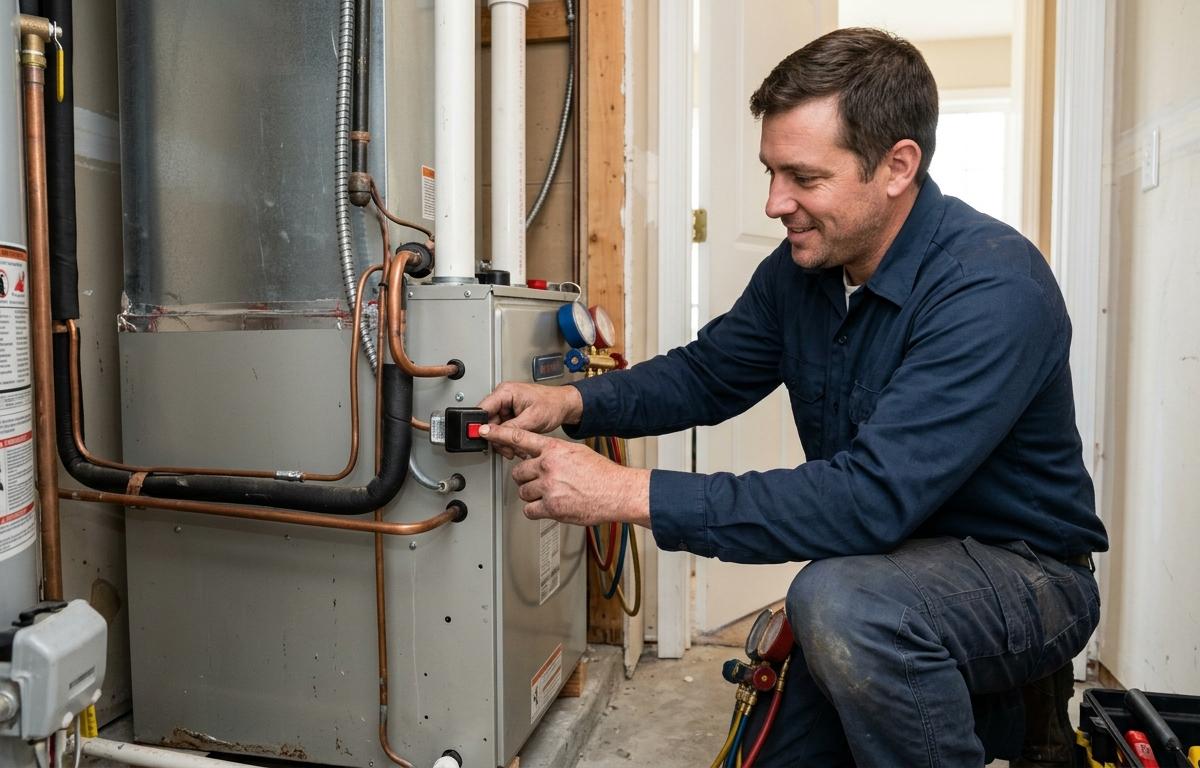
High Pressure Switch: Reset, Causes & Safety
What a High Pressure Switch Does and Where It Sits
Your air conditioner moves heat by circulating refrigerant, and that refrigerant gets squeezed hard on its way out of the compressor. The high pressure switch is the small safety device that keeps the squeeze from going too far. It’s a normally closed switch: power flows to the compressor under ordinary conditions, and the circuit opens the moment discharge pressure climbs past a set trip point.
You’ll find it on the discharge side of the system, between the compressor and the condenser, according to this AC high pressure switch guide. That spot makes sense. It’s where pressure runs highest, so it’s where trouble shows up first. When the switch opens, the compressor shuts off and your outdoor unit goes quiet. That’s the switch protecting the most expensive part of your system from damage.
Trip points vary by equipment. Many residential R-410A switches open somewhere between 590 and 650 psig and close again around 420 to 450 psig, based on third-party technical references. Treat those as general ranges and check your manufacturer’s literature for your exact unit. A healthy system on a 90°F day sits well below the trip point and never comes close to it.
Some switches reset on their own once pressure falls. Others are manual reset and stay open until someone presses a button. So if your AC stops cooling and the outdoor unit won’t start, the switch may be doing exactly the job it was built for.
Why It Trips and What Causes Repeat Trips
A high pressure switch never trips for no reason. Something is making the system run hotter and harder than it should. The usual suspects behind a repeat trip:
- A dirty condenser coil. When the outdoor coil is caked with dirt, cottonwood fluff or grass clippings, heat can’t escape and pressure climbs.
- A failed or weak condenser fan motor. If the fan isn’t pulling air across the coil, the refrigerant can’t shed its heat.
- An overcharge of refrigerant. Too much refrigerant raises pressure all by itself.
- A restriction in the liquid line. A blockage keeps refrigerant from flowing freely and drives pressure up behind it.
A clogged air filter or blocked airflow can pile on, since poor airflow makes the whole system work harder. And on a brutal Houston afternoon, high outdoor temperatures can push a marginal system over the edge. A unit that’s fine in April can start tripping in August simply because it has less room to spare.
Here’s the key point: resetting the switch without fixing the cause will most likely trip it again. One trip during extreme heat might be a fluke. A switch that trips again and again is telling you something is wrong. Some heat-pump control boards even lock out after three consecutive high pressure trips in one cycle and demand a manual reset. Take that lockout as a warning, not an inconvenience to work around.
How to Reset It Safely and When to Stop
If you want to try a reset, do it carefully and only once. Here’s the safe sequence:
- Turn the thermostat to off.
- Shut off power to the system at the circuit breaker before touching anything, as this reset guide stresses to avoid electrical hazards.
- Wait a while so the system and its pressure can settle.
- Check the easy stuff. Look at your air filter and make sure debris or overgrown plants aren’t crowding the outdoor unit.
- Restore power and, if you have a manual-reset switch, press the reset button once. Not every system has one, and many switches reset automatically.
- Turn the thermostat back on and watch whether the system runs normally.
If it runs and cools, great. Keep an eye on it for the rest of the day. For a general walkthrough, this reset guide covers the basics.
Now the part that matters most: knowing when to stop. If the system trips again after a reset, don’t keep trying. Repeated resets force the compressor to run under the very conditions the switch exists to protect it from. Stop, too, if you hear unusual noises, smell something burning, or spot ice or oily residue near the unit. Testing the switch with a meter, replacing it, or checking the refrigerant charge is technician territory. Those jobs take the right tools and training.
Heat-Wave Safety for Houston Homeowners
Houston summers are exactly when a high pressure switch earns its keep, and exactly when homeowners are tempted to cut corners. It’s 100 degrees outside, the house is warming up, and flipping the breaker off and on until the AC kicks back in feels like a reasonable move.
It isn’t. If the high pressure switch caused the lockout, cycling the breaker without finding the underlying airflow or pressure problem forces the system to run under dangerous conditions, a risk this tripped switch diagnostic article points out directly. You could turn a repairable issue into a failed compressor, and that’s a much bigger headache to sort out in the middle of summer.
So what do you do while you wait for help? Keep your family comfortable and safe first:
- Close blinds and curtains on sun-facing windows to slow heat buildup.
- Run ceiling fans and portable fans to keep air moving.
- Drink plenty of water and skip strenuous activity during the hottest part of the day.
- Check on children, older relatives, and pets, who feel the heat fastest.
- Move to the coolest room in the house, usually a lower floor or an interior room.
If anyone shows signs of heat illness, such as dizziness, confusion, or heavy sweating followed by a lack of it, treat it as a real emergency: get them cooled down and seek medical help. Comfort matters, but safety comes first. Once everyone is settled, call a professional rather than wrestling with the system yourself.
Prevention Tips and When to Call Uptown 24/7, Including Spanish-Language Help
The best way to deal with a tripped switch is to keep it from tripping at all. Most prevention comes down to simple habits:
- Change your air filter regularly. A clean filter keeps airflow strong and eases the strain on the whole system.
- Keep the outdoor unit clear. Trim plants back and sweep away leaves, grass and debris so air can move freely around the condenser.
- Rinse dirt off the outdoor coil gently, with the power off, whenever you notice buildup.
- Schedule a tune-up before summer hits. A technician can clean the coil, test the fan motor, and catch small problems before they become lockouts.
Regular filter changes and coil cleaning are the simplest ways to head off future trips, a point echoed in this expert Q&A on resetting the switch. If you’d rather have a pro handle it, our air conditioner repair service covers diagnosis and fixes, and the guide on AC unit repair in Houston walks through what to expect. You can also read more about how a high pressure switch protects your AC system.
When your high pressure switch trips a second time, or you simply don’t feel comfortable poking around, that’s the moment to call. Uptown Heating & Air Conditioning is a family-owned company serving Houston, Katy, Cypress, Richmond and Sugar Land, with 24/7 emergency service, online booking and financing options if repair turns into replacement. A technician will find out why the switch is tripping before recommending a fix, so you understand the problem before you decide anything.
¿Prefiere hablar en español? Nuestro equipo atiende también a clientes de habla hispana, así que no dude en pedir ayuda en su idioma. Cuando el aire acondicionado se apaga y el interruptor de alta presión vuelve a dispararse, llámenos: lo revisamos con calma y le explicamos todo con claridad.
Stay cool, Houston. 🌬️ If your high pressure switch keeps tripping, we’re here around the clock.
