

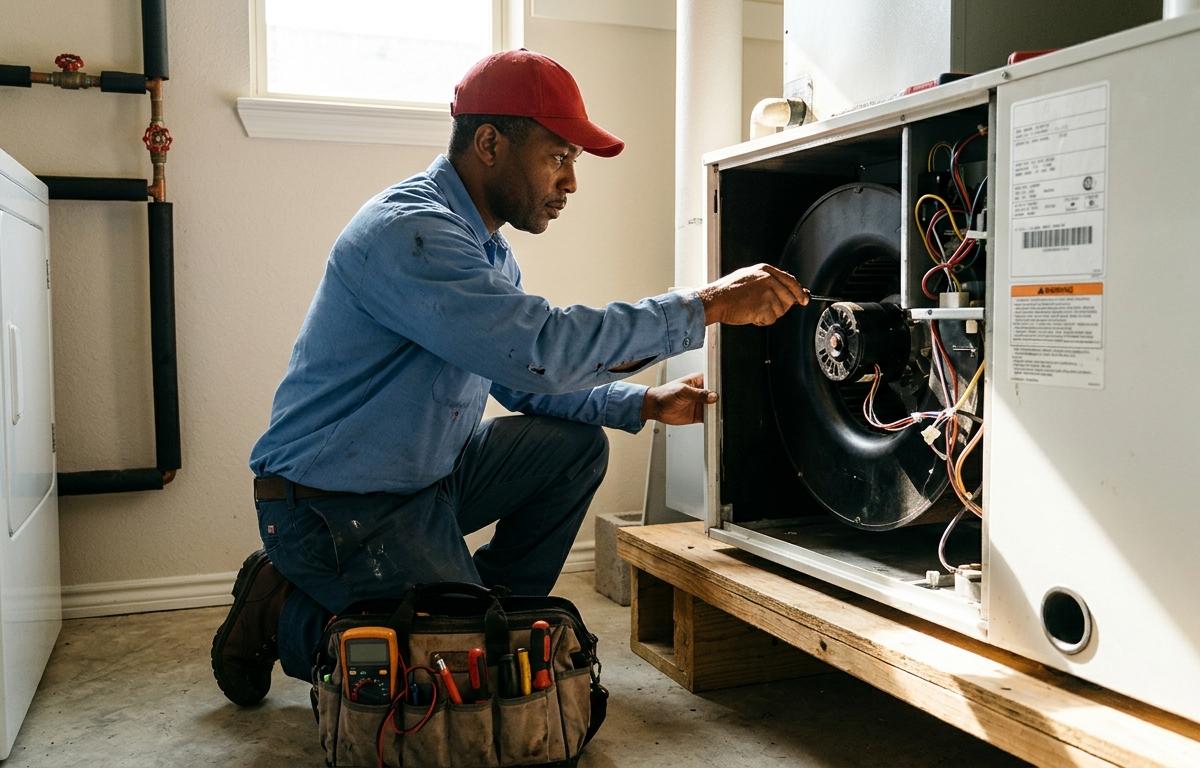
AC Fan Blower Not Working: Houston Fixes
When your ac fan blower not working problem hits during a Houston summer, it gets urgent fast. The house warms up, the humidity creeps in, and the system that normally keeps you comfortable just sits there, silent. 😅 The good news is that many blower problems come down to power, settings or airflow, and a few safe checks can sort them out in minutes. In Houston, plenty of "no cool" calls turn out to be airflow or control issues, according to American Renovating, so it pays to start with the simple stuff.
Work through the steps below in order. The moment something looks electrical or feels beyond a quick check, stop and call us. Your safety comes before any DIY fix.
Step 1: Check the Power, Breaker and Wall Switch Safely
Start where the blower gets its energy, since an ac fan blower not working problem often traces back to power. The indoor blower won’t run if the house circuit breaker has tripped, and that’s the first thing any homeowner can check. Head to your electrical panel, find the breaker for the air handler or furnace, and see whether it’s sitting in the middle or "off" position.
If it’s tripped, reset it once. Flip it fully off, then firmly back on. Don’t try a second time. A breaker that trips again right away is telling you there’s an electrical problem, and that calls for a licensed technician, not more flipping. 🚫
Next, look near the indoor unit. Some blower units have a light-style switch mounted beside them, and it’s easy to bump off during other household work. Make sure it’s in the "on" position.
A few safety reminders while you check:
- Stay at the panel and the switch. Don’t remove access panels from the unit.
- Never touch capacitors, wiring or moving blower parts. Even with the thermostat off, stored electrical energy can be dangerous.
- If you smell burning, see scorch marks or hear buzzing from the panel, stop and call right away.
Power surges are another culprit worth knowing about. A surge or glitch on the power lines can knock out the electronic control board, so the fan won’t run even though everything looks fine at the breaker. That one’s for a pro to diagnose.
Step 2: Check the Thermostat, Batteries and Filter
If power looks good, move on to the controls. A surprising number of "broken blower" calls start at the thermostat. It may be set to "off," or switched to "fan only" when you wanted cooling. Confirm it’s set to "cool," that the set temperature sits a few degrees below the room temperature, and that the display is lit.
Blank or dim screen? Replace the batteries. Low batteries are a common culprit, and it’s a two-minute fix that can save you a service call. And if you’re wondering whether a bad thermostat can cause an ac fan blower not working, it can, which is why we check it before anything else.
Now the filter. Slide it out and hold it up to a light. If you can’t see light through it, it’s clogged. A dirty filter chokes off airflow and forces the blower motor to work harder, and that extra strain can shorten the motor’s life. It can also lead to the system shutting down on you. Swap in a fresh filter of the right size. As a habit, Quality PM recommends changing filters every 1–3 months and scheduling annual AC maintenance, which suits Houston’s long cooling season well.
If you’ve covered the thermostat and filter and the fan still won’t spin, that tells you something useful. The easy causes are ruled out, and the next stop is a look at moisture and ice.
Step 3: Look for a Frozen Coil and a Clogged Drain Line
Houston’s humidity changes how your AC behaves, and it can make an ac fan blower not working problem harder to diagnose. Your system pulls enormous amounts of moisture out of the air, often several gallons a day, and all that water has to go somewhere. When something gets in the way, you can end up with ice or a backed-up drain.
A frozen indoor coil is a classic example. When the coil freezes from airflow or refrigerant issues, air can turn very weak or stop altogether, and it can look like the blower isn’t working. Signs to watch for:
- Ice or frost on the refrigerant lines or the indoor coil
- Weak airflow from the vents, or none at all
- Water dripping or pooling around the indoor unit once the ice melts
If you suspect ice, switch the thermostat from "cool" to "off" and let the system thaw. Running the AC against a frozen coil only makes things worse. Thawing can take a few hours, so don’t rush it.
Then check the drain line. A clogged condensate drain can back up water and trip a safety float switch, which shuts the system down to protect your home from leaks. Look at the exterior drain end. A wet-dry vacuum held at that end can often pull out the clog. If water is pooling near the unit inside, or the clog keeps coming back, it’s worth a professional cleaning, and a good moment to ask about regular maintenance.
A frozen coil that comes back after thawing points to an underlying airflow or refrigerant issue, so have a tech take a look rather than waiting for it to freeze again.
Step 4: Know When Capacitors, Control Boards and Motors Need a Pro
This is where the DIY checklist ends. 🛑 If power, thermostat, filter and drain all check out, the cause is usually an electrical or mechanical part inside the unit, and those aren’t safe for homeowners to touch.
Capacitors. A bad capacitor is a common reason a blower won’t start. It gives the motor the jolt it needs to get spinning, and when it weakens you may hear humming with no movement. Capacitors hold a charge, which is exactly why you should never poke around one. If that’s the likely culprit, our AC capacitor replacement price guide explains what to expect.
Control boards and relays. If the electronic control board or a relay fails, the fan won’t run, and diagnosing it usually takes a professional AC repair visit. Surges are a frequent trigger, as noted earlier.
The blower motor itself. A motor that hums without moving the fan is a classic symptom, and replacing it typically takes a service call. If you’re weighing repair against replacement, our furnace blower motor replacement guide walks through how techs think about that decision, and the same logic applies to many air handler motors. For a broader troubleshooting reference, United HVAC Motors lays out common blower motor issues and fixes.
Should you turn the AC off if the blower isn’t running? Generally, yes. If the indoor fan isn’t moving air and the simple checks don’t get it going, shut the system off at the thermostat. That helps prevent a frozen coil or extra strain on other components while you wait for service.
If your fan runs on its own but not when the AC calls for cooling, that often points to a control or capacitor problem, and it’s a great detail to mention when you call. The same goes for a blower that only works sometimes. We’ve covered that frustrating pattern in our post on a furnace working sometimes but not every time, and the intermittent-failure logic carries over to AC systems too.
When to Call Uptown for 24/7 Help Right Away
You don’t need to push through every step before calling. Reach out to us right away if:
- The breaker trips again after one reset
- You smell burning, see scorching, or hear buzzing or grinding
- The motor hums but the fan won’t turn
- Ice keeps returning after the coil thaws
- It’s hot, someone in the home is vulnerable to heat, and you need cooling back fast
Uptown Heating & Air Conditioning is a family-owned and operated company serving Houston, Katy, Cypress, Richmond and Sugar Land, with 24/7 emergency service, online booking and financing options. We handle air conditioning repair, replacement, new installations, tune-ups and preventative maintenance. 💙 We also help Spanish-speaking customers, so you can describe the problem in whichever language feels most comfortable.
To see how we approach repairs, take a look at our Air Conditioner Repair service page, or read about AC unit repair in Houston and your options. Staying ahead of problems beats fixing them mid-heatwave, which is why a yearly tune-up and regular filter changes are worth the small effort.
An ac fan blower not working in the middle of a heatwave is stressful, but you don’t have to sort it out alone. Check the breaker, the thermostat and the filter, look for ice and a clogged drain, and when the trail leads to capacitors, boards or motors, give us a call. We’ll get your home cool again, fast and fairly.
