

Low Pressure Switch: Why Your AC Shuts Off
What a Low Pressure Switch Does and Where It Sits
Picture a sweltering Houston afternoon. The thermostat is calling for cool air, and nothing is happening. One common culprit is a tripped low pressure switch, a small safety device doing exactly the job it was built for.
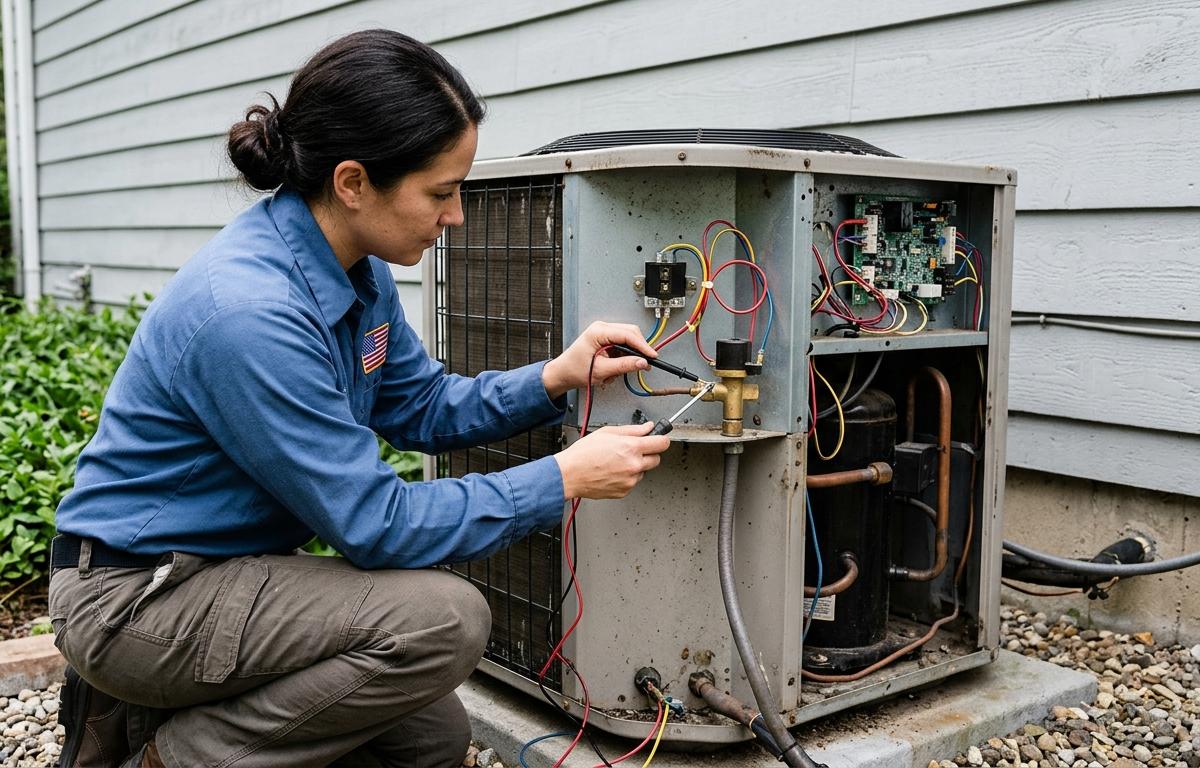
The low pressure switch sits on the suction side of your system, threaded into the vapor line near the service valve outside. It protects the compressor, the priciest part of your air conditioner. When suction pressure falls below a set point, the switch opens its electrical contacts and cuts the signal that keeps the compressor running. The outdoor unit stops, and in many cases the house stops cooling.
Here’s what surprises most homeowners: a low pressure switch is not a refrigerant gauge. According to ACDirect’s guide to R-410A pressure switches, the switch isn’t telling you the system is "low on refrigerant." It’s telling you the suction side dropped below a number someone chose to protect the compressor. Low refrigerant is one possible reason for that drop, but not the only one.
For typical residential R-410A systems, one source puts the opening point somewhere in the 20 to 50 psig range, with a reset between 40 and 90 psig. Exact values vary by manufacturer, so a technician checks them against your equipment’s specs rather than guessing.
Think of the switch as a smoke detector, not a fire. When it trips, something upstream is wrong. Shutting down is the safe response, and a good technician treats the trip as a clue.
One quick distinction: your furnace has its own pressure switch, a separate part with a different job. This article covers the cooling side.
Why It Trips: Filters, Leaks, Icing and Houston Heat
When suction pressure falls too low, the same few culprits show up again and again.
A dirty filter or blocked return. Your system needs steady airflow across the indoor coil to carry heat into the refrigerant. A clogged filter chokes that airflow, the coil gets too cold, and refrigerant pressure drops. One guide goes as far as saying dirty air filters cause more AC failures than any other single factor. That’s one source’s claim, but it matches what we see in the field, and the filter is the cheapest thing to check.
An iced evaporator coil. Restricted airflow often leads to ice on the indoor coil. Ice insulates the coil, makes it even harder to absorb heat, and drives suction pressure lower still. Frost on the copper line or coil is a strong hint the trip is airflow-related.
A slow refrigerant leak. A leak lets refrigerant escape over weeks or months, so suction pressure gradually sinks until the switch opens. Refrigerant doesn’t get "used up" like fuel, so a system that’s low has a leak somewhere. Topping it off without finding the leak only buys you time.
A restricted metering device. This part controls how much refrigerant enters the evaporator. If it clogs or fails, refrigerant flow drops and so does suction pressure.
Houston heat as the tipping point. Our long, humid, high-load summers push systems hard. A marginal system, with a slightly dirty filter, a small leak or a grimy coil, can limp along on a mild day and then trip on the first brutal afternoon. The heat doesn’t create the problem so much as expose it. That’s why so many trips seem to happen "out of nowhere" in July and August.
The switch trips for a reason, and the reason is usually airflow or refrigerant. Both are worth chasing down properly.
Can You Reset It Yourself? Safe Steps and When to Stop
Many homeowners ask whether they can reset a low pressure switch themselves. You can try a few safe, simple things, but don’t force it.
Sources disagree a little on how resetting works. On many systems the switch resets automatically once pressure climbs back to its reset point, so there may be no button to press at all. Other guides suggest cutting power, waiting a few minutes and restoring it. Because equipment varies, here’s a cautious approach that fits both:
- Turn the thermostat to Off and switch the system’s breaker off for several minutes.
- Check and replace the air filter if it’s dirty. Make sure supply and return vents aren’t blocked by furniture or rugs.
- Look for ice on the indoor coil or the larger copper line. If you see it, leave the system off and let it thaw completely, which can take hours, before trying again.
- Restore power and set the thermostat to Cool. Watch whether the outdoor unit starts and keeps running.
If it runs normally, great. Watch it for the next day or two and keep the filter clean.
Now the "when to stop" part, which matters most. Don’t repeatedly reset a unit that keeps tripping. Each restart can stress the compressor, and the switch is shutting the system down to prevent exactly that. Never open panels, bypass the switch or jumper its wires, either. Bypassing a safety device can destroy a compressor in short order, and refrigerant work belongs to licensed professionals, both legally and practically.
A simple rule: one trip after an obvious cause, like a filthy filter, deserves a gentle reset. A second trip, ice that keeps coming back, or a system that won’t restart means it’s time to call someone.
Repeat Trips: Finding the Root Cause, Not Just the Switch
When the AC keeps shutting off, the instinct is to blame the switch and replace it. Usually that’s the wrong move. A switch is a simple on/off contact, and it’s almost always telling the truth.
One source makes the point well: if you replace a low pressure switch and the new one trips again within minutes, you almost certainly have a leak or a restriction. A fresh switch doesn’t fix low pressure. It just opens at the same point as the old one.
A technician can confirm whether the switch itself is at fault with a meter. With the switch isolated and the circuit safely de-energized, a closed switch should read near 0 ohms, and an open switch reads OL (open line). If the switch is open while system pressure is actually normal, the switch may be bad. If it’s open because pressure is genuinely low, the switch is doing its job and the hunt moves to the cause.
From there, a proper diagnosis typically looks at:
- Airflow: filter condition, blower operation, coil cleanliness and return restrictions. If the indoor blower is weak or dead, our guide to AC fan blower problems in Houston covers what that looks like.
- Refrigerant charge and leaks: measuring pressures and checking for a leak instead of just adding refrigerant.
- Metering device and coil condition: looking for restrictions or ice patterns.
- Electrical components: weak parts can mimic or worsen shutdowns. A failing capacitor is a classic example, and we break down AC capacitor replacement costs in Houston.
The goal is a repair that lasts the season, not a swap that lets the same failure return next week. For more on how this safety fits into the bigger picture, see our post on how a low pressure switch protects your A/C system. And if you’re curious about the other half of the safety pair, our explainer on the high pressure switch, its resets and causes walks through that side.
When to Call Uptown Heating & Air for 24/7 Help
You don’t have to tough out a hot house while you wonder whether it’s the filter, a leak or something else. Pick up the phone if:
- The AC trips or shuts off more than once, even after a fresh filter and a reset.
- You see ice on the coil or refrigerant line that returns after thawing.
- The outdoor unit won’t start, or you hear buzzing, clicking or humming without it running.
- Cooling is weak and the system short-cycles on hot afternoons.
- You suspect a refrigerant leak, such as hissing sounds or steadily declining performance.
Uptown Heating & Air Conditioning is a family-owned and operated HVAC company serving Houston, Katy, Cypress, Richmond and Sugar Land. We offer 24/7 emergency service because AC trouble rarely waits for business hours. Our technicians diagnose first, explain what they find in plain English, and give you transparent pricing before work begins. Whether the answer is a simple airflow fix, a leak repair or a switch replacement, you’ll know exactly what’s happening and why. You can read more about how we handle air conditioner repair or see what a typical AC unit repair looks like in Houston.
Online booking is available if you’d rather schedule than call, and financing options can help if the fix turns into a bigger job. Hablamos español, too, so our Spanish-speaking neighbors can describe the problem and get answers in the language they’re most comfortable with.
A tripped low pressure switch is your system asking for help before something costly breaks. Answer it early, and you’ll stay cool, protect your compressor and dodge a much bigger bill down the road.
